

Ramaphosa: Climate Action and Economic Growth Are Mutually Reinforcing for South Africa’s Prosperity
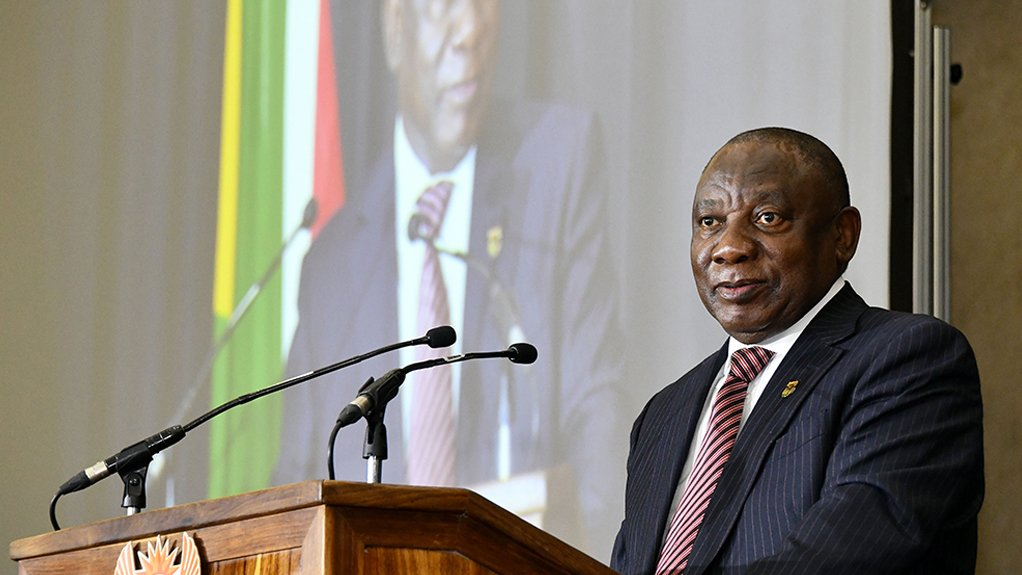
President Cyril Ramaphosa has stressed that tackling climate change can go hand in hand with building a stronger economy, creating new jobs and opportunities along the way. Speaking during a fireside chat at the Abu Dhabi Sustainability Week (ADSW) 2026 in the United Arab Emirates (UAE), he shared how countries that push forward with green plans often see real growth. This event, held from 13 to 16 January 2026, brings together world leaders, experts, and businesses to talk about sustainable ways to handle energy, water, and the environment. Ramaphosa’s words come as South Africa works hard on its own shift to cleaner energy, showing how global talks like this can help shape local plans.
The President’s visit to the UAE is part of a bigger push to strengthen ties between the two countries, focusing on trade, investment, and shared goals like renewable energy. With South Africa facing high unemployment and the need for more power, Ramaphosa’s message offers hope that going green can fix these issues without hurting growth. As the world deals with hotter weather and rising seas, his call for a balanced approach reminds us that smart choices now can lead to a better future for everyone, especially in Africa where sunshine and wind could power big changes.
Key Highlights from Ramaphosa’s Fireside Chat
In his talk, titled “A Vision for Global Energy Transition,” Ramaphosa explained that climate goals and economic dreams do not have to clash. “In fact, countries that have embarked on climate action strategies, have found that those interventions do finally yield economic growth. So therefore, one needs to see climate action as a driver and an enabler for economic growth,” he said.
He pointed out how switching to clean energy brings fresh ideas and jobs. “The more we embrace clean energy, the more new technologies come about, new opportunities open up and we find that there are new sub-sectors of the economy that are established and where we might close certain sub-sectors, new ones open. Therefore, it’s not a binary question. It’s a mutually inclusive and reinforcing approach,” the President added.
Ramaphosa warned against picking one over the other. “If we focus on economic growth, to the detriment of climate taking climate action, you’ll find that in the long term, you have economic stagnation or reversal. If you focus on the other only, you’ll find that your economy may grow but it will not grow well. A dual approach, focusing on both, can actually drive the economy forward,” he explained. This balanced view is key for South Africa, where coal has long powered the nation but now brings health and planet worries.
South Africa’s Just Energy Transition: A Model for the Global South
Looking back at South Africa’s own steps, Ramaphosa shared how the country set its climate goals first, then found smart ways to pay for them. “One of the advantages [to this] was, we were able to raise finance smartly, we were able to raise fairly good, blended finance initiatives, grants, concessional financing…so the blended finance architecture was quite good and innovative,” he said.
This refers to the Just Energy Transition Partnership (JETP), a deal South Africa signed in 2021 with countries like the US, UK, France, Germany, and the EU. It promises about R150 billion (around $8.5 billion) in loans, grants, and investments to help move away from coal to renewables like solar and wind. The plan aims to cut emissions while protecting jobs in coal areas, creating new ones in green fields.
Ramaphosa noted South Africa led the way for other developing nations. “We were first from the starting blocks and we’re very pleased that a number of countries from the global south have followed in the wake of what South Africa did. We now have attracted, particularly in the Northern Cape… more than R110 billion in investments,” he said. The Northern Cape, with its endless sunshine, has become a hotspot for solar farms, drawing big money from firms like Scatec and Engie.
He stressed that this success came from South Africa leading the talks, not having terms forced on it. “That has happened because it was South Africa designed and we got the financiers to work with us. There was nothing imposed on us like it has happened in the past. In the past, financiers have focused on what they could get out and we have focused on cooperation. A cooperative process has now been followed and both of us are involved,” Ramaphosa explained. This approach has helped build trust and avoid past pitfalls where loans left countries in debt without real gains.
Africa’s Role as a Green Energy Exporter: Opportunities Ahead
Shifting to the bigger picture, Ramaphosa called Africa a goldmine for green energy. “Turning to the Africa’s potential role as an exporter of green energy, President Ramaphosa highlighted the continent’s endowment of vast amounts of sun, wind power and hydropower as areas of opportunity for investment. A combination of all three, as well as our minerals, gives rise to great opportunities where we can generate energy,” he said.
With over 600 million Africans still without electricity, he sees this as a chance, not just a problem. “[Some] 600 million people on the African continent, still lack electricity. That, in itself, rather than being a challenge, we see it as an opportunity… that we can utilise all these endowments – our minerals – instead of exporting rock, soil and stones. We should now beneficiate, add value to our minerals so that they are properly utilised in the energy generation,” the President noted.
Africa holds key minerals like cobalt, lithium, and platinum, needed for batteries and hydrogen tech. Ramaphosa pushed for processing these at home to create jobs and wealth, instead of shipping them raw. “Africa is the centre where green hydrogen can [also] be greatly utilised. We can use our solar, wind and in doing so, Africa can become an exporter of energy. This is where we invite financiers, investors to come to the African continent,” he urged.
Green hydrogen, made from water using renewable power, could fuel ships, trucks, and factories without pollution. Countries like Namibia and Morocco are already building big projects, and South Africa aims to join with its Hydrogen Valley plan in Limpopo, Gauteng, and KwaZulu-Natal. This could export to Europe and Asia, bringing in billions while cutting global emissions.
Ramaphosa wrapped up with a call to action: “We’ve got great opportunities for generating energy…and infrastructure development in Africa is going to explode by leaps and bounds and on the back of energy generation and good financing, we will be able to see higher levels of growth. I invite you… to come to the African continent and invest there. That is where the future is.”
🔴Central News Special Edition | Issue 124: Download the Latest Print and E-Edition | Ngathe Municipality Brings Water Back To Tumahole Taps After 20 Years Of Struggle🔴
Download Here:
Direct PDF File Here:
https://centralnews.co.za/wp-content/uploads/2025/07/Central-News-Issue-114-1.pdf
Read all our publications on magzter:
https://www.magzter.com/ZA/Central-News-Pty-Ltd/Central-News/Newspaper/All-Issues
Central News also offers Sponsored Editorial Content, Podcasts , Radio / Social Media Simulcast, Video Production , Live Streaming Services, Press Conferences, and Paid Interviews (Video/Audio) etc.
We guarantee exceptional exposure, reach, and engagement, with an excellent return on investment.
Advertisement:
To place your advert on our platforms (Print Newspaper or Digital Platforms) : Please email : sales@centralnews.co.za
For Business Related:
business@centralnews.co.za
Newsroom:
Send your Stories / Media Statements To: newsroom@centralnews.co.za
General Info: info@centralnews.co.za
Office Administrator:
admin@centralnews.co.za
Whatsapp / Call: 081 495 5487
Website: https://www.centralnews.co.za
Social Media Platforms (@centralnewsza) : Linkedin, Facebook, Tiktok, Twitter, Instagram, Youtube